Showing posts with label Giant Pacific Octopus. Show all posts

Tuesday, December 1, 2020

A Giant Named Tiny: Rearing a Giant Pacific Octopus

This blog post adapted from a presentation by Ali Redman, Aquarium Curator.


It all started out with the “Light Trap.” So I must begin this story with how we came to have a light trap and why. 

This past spring we joined the Pacific Northwest Crab Research Group, which is a diverse collaboration of crab researchers and managers who monitor larval recruitment of Dungeness crab using light traps with the goal of producing a sustainable Dungeness crab fishery. 


diagram of Light Trap used 
to count Dungeness crab larvae

The light trap is composed of a float attached to a 5-gallon water bottle with a light inside. Zooplankton enter through funnels, attracted by a light inside the water bottle. 
This past spring and summer, PTMSC staff and interns regularly counted the number of Dungeness crab larvae that were in the trap and reported that to the research group. Not surprisingly, lots of other kinds of zooplankton were also found in the trap. See the chart below for an idea of the diversity of “bycatch.”

Sample of diverse bycatch from the light trap


Even on the very first day, we found pelagic (floating in the water column) paralarval octopuses, both red Pacific octopuses and giant Pacific octopuses (GPOs). Raising octopuses from a paralarval stage in captivity is notoriously hard to do, and has only been done twice successfully. Keeping a pelagic paralarval octopus alive requires a kreisel or “jellyfish tank.” So we were not planning on collecting any octopuses from the light trap.


However, on June 10, we noticed an octopus zooplankton that was different. This female GPO was benthic, which means that she attached to things and crawled. We thought perhaps we could raise her without a specialized tank. We named her Tiny, because, well, she was tiny!


WATCH THIS VIDEO of Tiny the
octopus as a pararval zooplankton!


During phase 1 of raising Tiny, we used a “muck tub,” a piece of aquarium equipment used for larval fish rearing. It had fine mesh covering the drain and a lowered water level to keep her from climbing out. And because octopuses are so intelligent, we kept the tub stocked with a variety of decorations to stimulate her natural curiosity. Tiny ate a diet of wild caught plankton (zoea and other tiny crustaceans), and enriched brine shrimp.
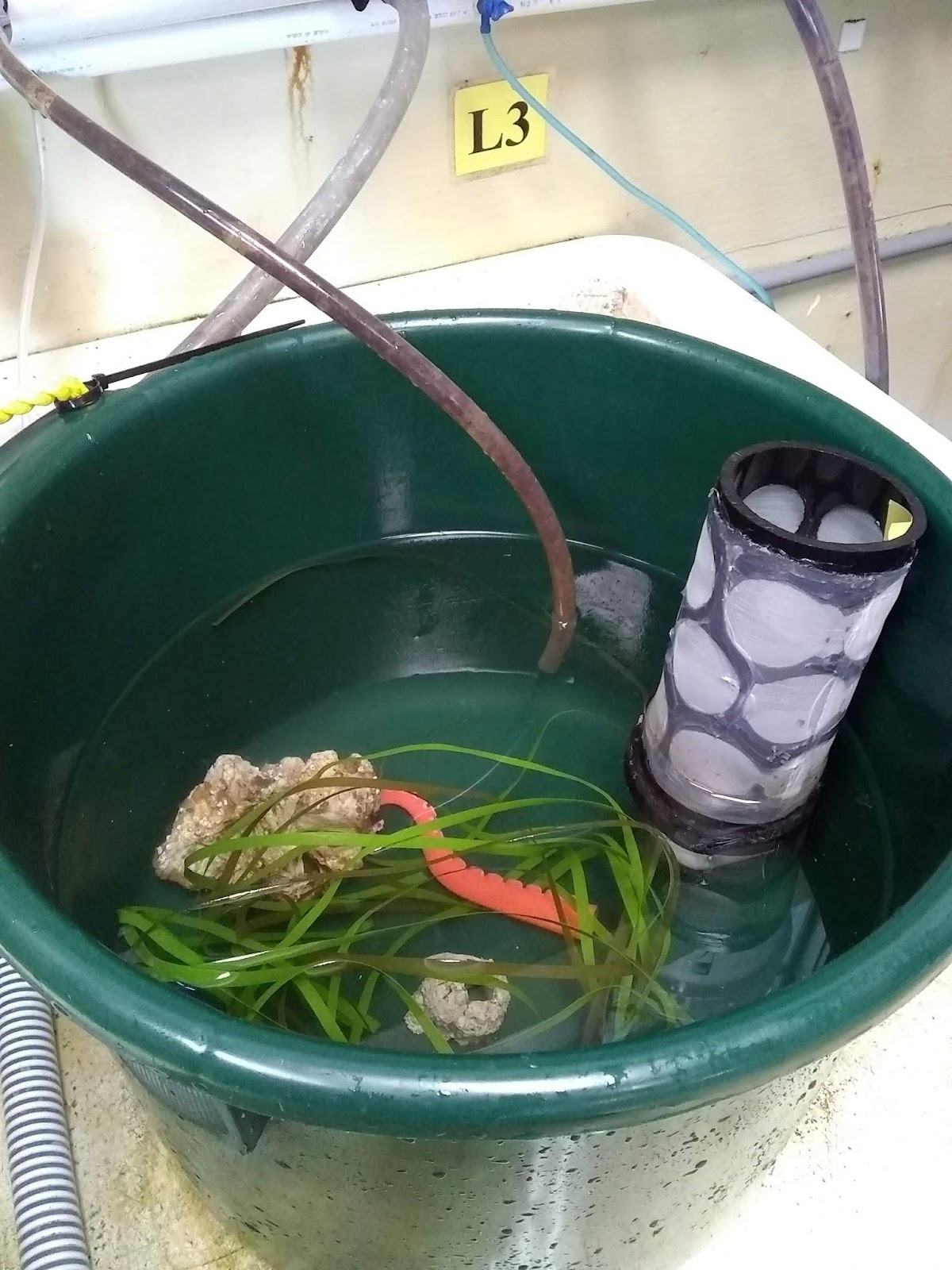


Tiny the octopus started out in this muck tub!
When Tiny got big enough, we began weighing her weekly. We were very excited to see steady and vigorous growth. Her average growth rate was 2% of her body weight each day! 

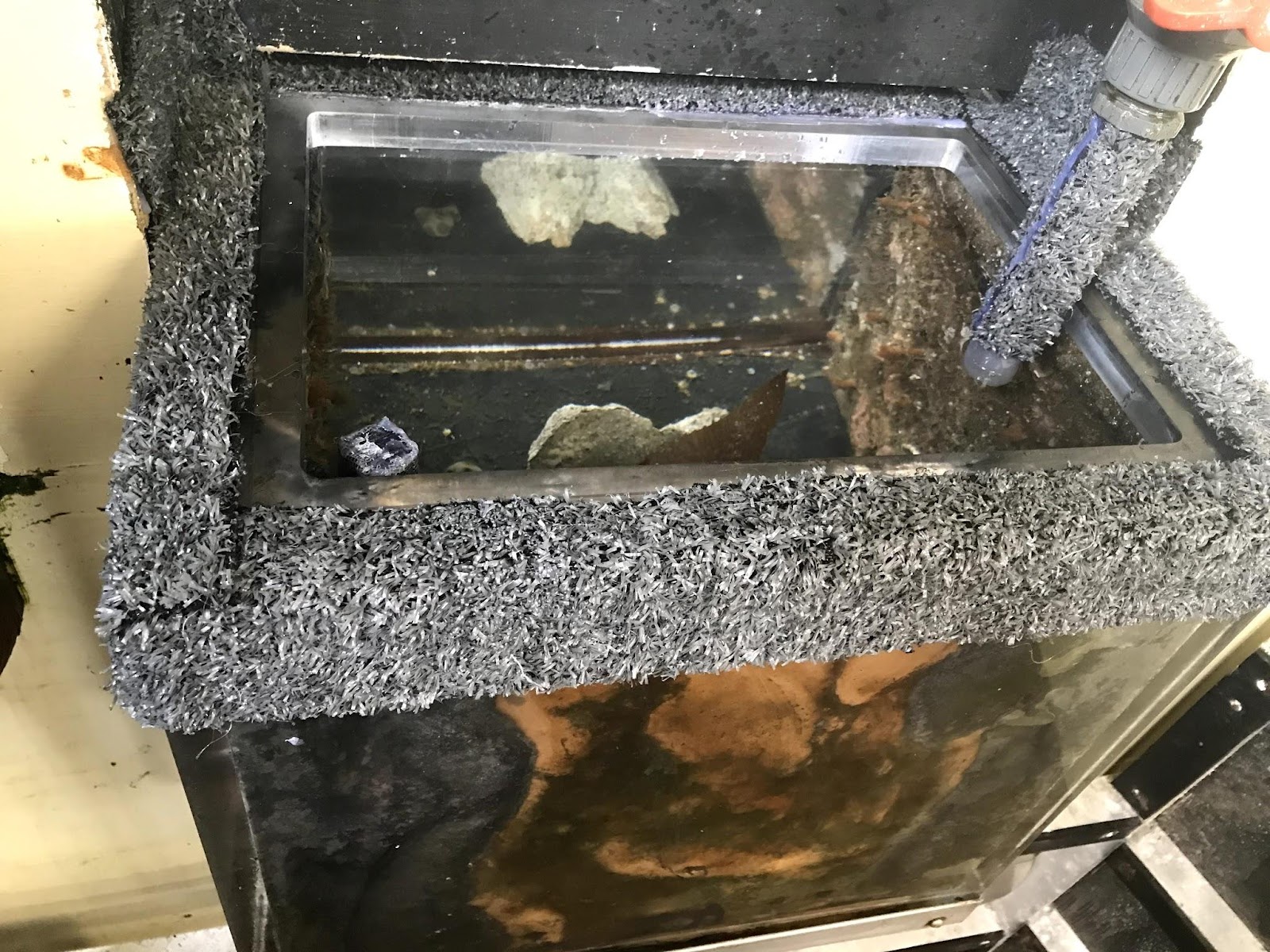
Finally, when she was big enough (but still tiny, of course) she was moved to a tank in the aquarium exhibit. Astroturf around the rim and a weighted lid is now required to deter Tiny from wandering.


Here are a few fun facts about octopuses.


GPO vs red Pacific:

2 rows of dots on tentacles=red Pacific

1 row of dots on tentacles=GPO


Sexing Octopuses

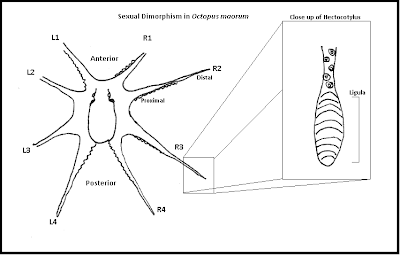
Male octopuses have a hectocotylus, on the tip of the third right tentacle.

Tiny doesn’t have a hectocotylus, therefore Tiny is female.


Check out this video titled "Tiny over Time" which documents Tiny's growth during her stay with us here at the Port Townsend Marine Science Center:


Donate to our GivingTuesday campaign TODAY!


Monday, December 10, 2018

An Enchanting Lady stars in the Octopus Learning Project

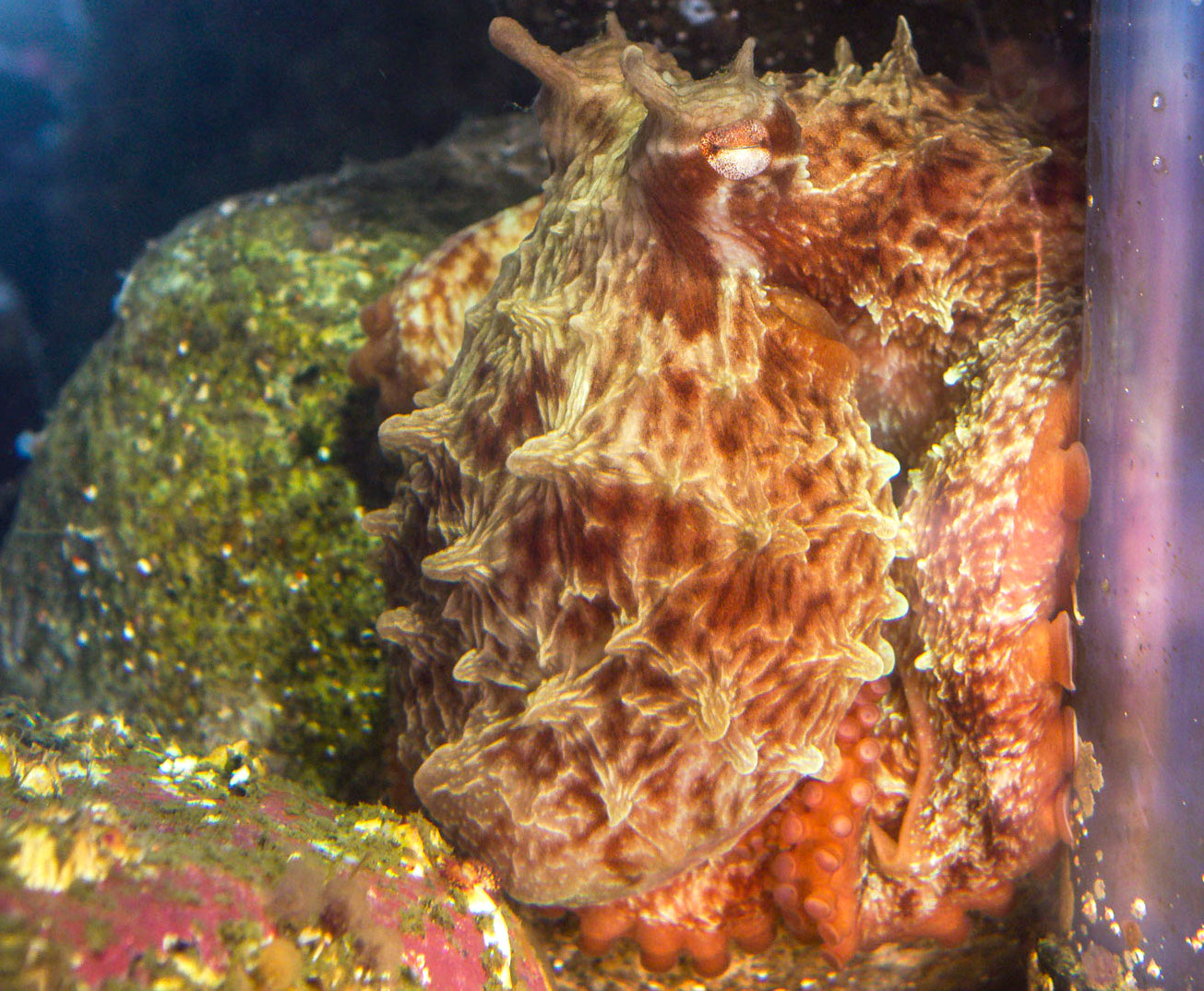
Eleanora, a giant Pacific octopus, has taken up residency at the aquarium


Eleanora, a giant Pacific octopus, in repose in her tank at entrance of the Aquarium. Photo by Florian Graner.

Her name is Eleanora -- Nora for short -- and she is as mysterious as she is majestic, as elusive as she is enchanting. She’s a two-year-old (ish) giant Pacific octopus and, these days, the Port Townsend Marine Science Center is lucky to host her.

Given to the Port Townsend Marine Science Center by Friday Harbor Labs, Nora is the subject of filmmaker Florian Graner’s "Octopus Learning Project." The goal of the collaborative effort between Graner and PTMSC Aquarist Ali Redman can be summed up in three words: observe and learn.

PTMSC Aquarist Ali Redman observes 'Nora.
Photo by Florian Graner.
Graner, who has devoted his life to studying and filming undersea creatures, explains that the octopus is quite a reserved animal in the wild, only leaving the safety of its habitat (such as rocks and reefs) to feed.

So in order to truly understand its behaviors, we need to be able to observe them in a non-threatening environment.

Several times a week, Graner visits ‘Nora at the aquarium to film her for a German documentary he is producing about the giant Pacific octopus.

You might be surprised to learn that octopuses are smart. Very smart. In fact, they rank among the most intelligent invertebrates in the world.

Nora certainly lives up to that claim. Redman often coaxes her out of hiding with a clam in a bottle.

“Animals are trained in steps,” she explains. “When they approximate a behavior, you reward them.” 

Nora took her time warming up to the food jar with the green lid.
Photo by Florian Graner. 
But Nora also has a mind of her own. For some reason, she did not initially like the food jar with the green lid that Redman introduced, pushing it away and even avoiding it altogether. But then one day her hesitance vanished and she pushed the lid off so she could grasp the frozen fish “popsicle” inside. 

Having mastered that, Redman introduces a plastic Mr. Potato Head toy in an effort to teach ‘Nora how to open its back “flap” to retrieve a treat. Again, ‘Nora did not disappoint, billowing her large mantle out to envelop her shellfish snack before casting off the shells in a show of gastronomic satisfaction.

It’s mind-boggling to see Nora change colors – one minute a deep red-orange color, the next slipping into her brownish green-gray tones as she camouflages herself against the rocks. And then there’s her “digesting” phase – a somewhat more alabaster color. She’s got the perfect “outfit” for every occasion.

Octopus have an amazing ability to blend into their surroundings.
Photo by Florian Graner.
Nora will eventually outgrow her tank and be released back into the wild to live out her life to the fullest. One day, she may well approach 50 pounds.

But in the meantime, we look forward to watching her grow and learn, as we learn and grow from the incredible gift of her presence.

PS -- Watch video below of Eleanora retrieving food from a glass tube!


Friday, July 3, 2015

4th of July Low-Tide Walk

Saturday, July 4th
11:00 am - 12:30 pm 

Meet at the Natural History Exhibit at 11 am for a guided Low Tide Walk. Not only is tomorrow the 4th of July, but it's also a great low-tide (-2.12) perfect for a public low-tide walk!


If you'd like to join us and learn about the wondrous creatures beneath our waters, then come down to the Natural History Exhibit at Fort Worden at 11am on Saturday. Wear closed-toe shoes you'll be comfortable walking about a half-mile each way in on a gravel beach and dress for the weather. It should be a lot of fun!

Be sure to stop by the Marine Science Center at 2pm for the animal feeding in the Marine Exhibit to say goodbye to Inky, the Giant Pacific Octopus before her release back into her undersea world! She's had quite the stay here, growing larger and larger, eating lots of crabs, and helping PTMSC staff and volunteers educate our guests about the wonders of the Salish Sea.


PTMSC staff are preparing to release her very soon, crossing our fingers that she'll continue to grow, find a mate, and lay eggs that will introduce new little GPO's to the Salish Sea.

But wait! There's more!

Stick around for the first annual "Old School 4th of July!"


Fireworks are returning to Fort Worden this year and will make their official debut at 8:30 pm on Saturday. July 4th celebrations will be underway from 4pm-on at the Fort.

Wednesday, April 24, 2013

GiveBIG on May 15th


Jeeps, our Giant Pacific Octopus 
Photo courtesy of Wendy Feltham
 

Jeeps is hungry. She unfurls a slender red arm and slides up the smooth acrylic wall of her tank at the Port Townsend Marine Science Center (PTMSC) in search of her daily snack. Jeeps (short for GPO or Giant Pacific Octopus) is one of many marine animals we nurture at the center in order to generate awareness of marine life conservation in our local Salish Sea.

Did you know Jeeps and her species can learn to distinguish shapes and patterns and solve mazes? They have individual personalities and show emotions by changing their colors.

How to train your octopus
Jeeps is curious and likes to interact with children, often stirring from her den and flashing from bright red to mottled white when students come to visit. She is even learning to open a jar lid to get her food- check out this video of the first time she did it. 

You can help the PTMSC support the continued care and public education for beautiful marine animals such as Jeeps by participating in the Seattle Foundations' GiveBig campaign on May 15th. It's easy and it's fun! Whatever amount you give toward our goal of $10,000 is "stretched" by the Seattle Foundation, meaning they'll add to the amount you contribute.

Look for more behind-the-scenes photos and videos of our much-loved marine animals on Facebook leading up to the GiveBig day on May 15th, and follow us on Twitter.

Stay tuned for more information about this exciting way to extend your donation in support of marine animals through GiveBig.

Monday, November 15, 2010

Releasing the Queen

Dear Persephone,

In Greek mythology your name means the "Queen of the Underworld." Although you were a little deviant at times, you were definitely the queen of our hearts. You were a great octopus and we loved having you at our center!

We remember when we first got you from our friends on Whidbey Island last September. You were barely the size of a golf ball. It seems like only yesterday that you were hiding in the back of your tank,  shy and unsure... but look at you now! After a year of love from our visitors and volunteers and plenty of food you have grown to over 3 feet long!

Thank you Persephone for keeping us entertained during Homecrew, dancing with us, and reminding us how fascinating ocean creatures are! Good luck in the big blue!

~PTMSC staff and volunteers


Aspiring marine biologist enamored with Persephone