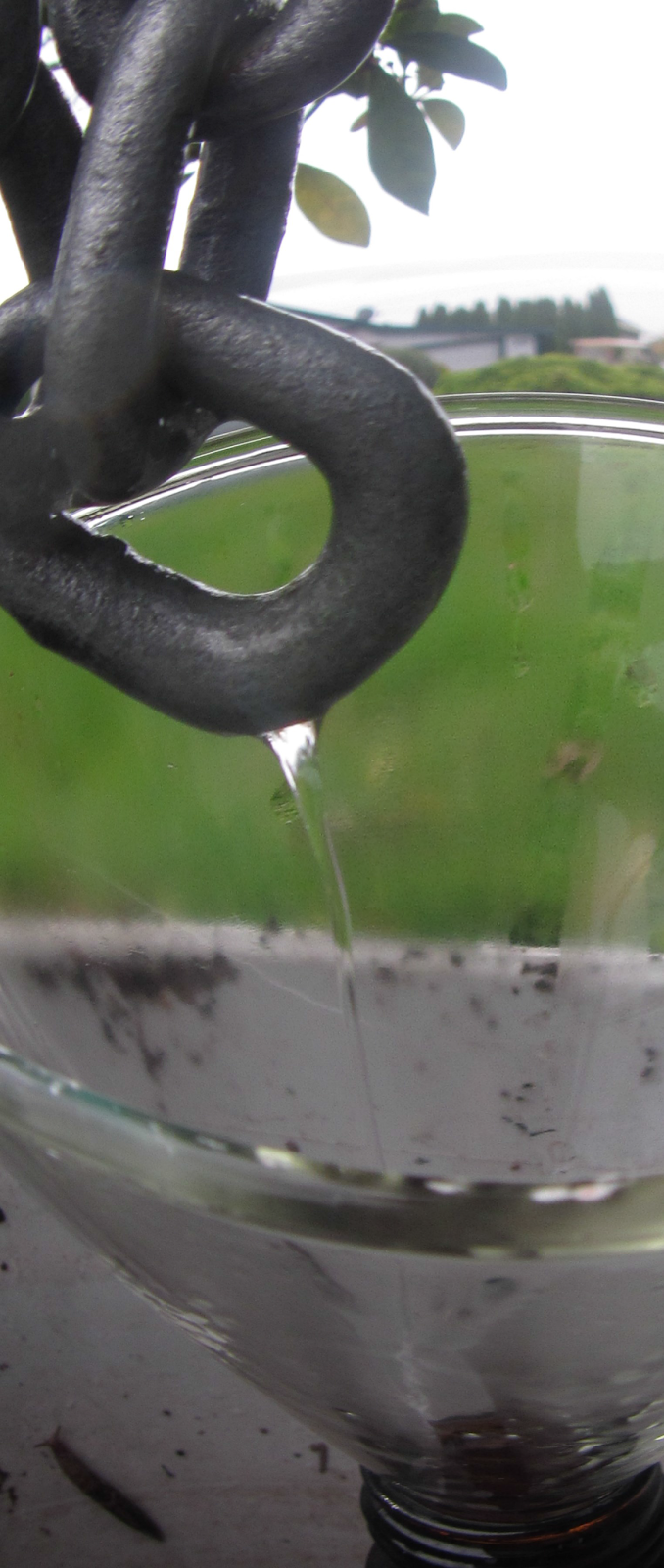
One stormy night in October of 2014, the PTMSC volunteers and staff completed the second and final round of roof runoff collection. Over 10 volunteers valiantly weathered the storm to collect runoff from 11 residential roofs in Port Townsend. With funding from the U.S. Environmental Protection Agency, PTMSC was able to send samples for analysis to the University of Washington labs in Tacoma. Our goal was to analyze for presence and abundance of a class of contaminants called PAHs (polycyclic aromatic hydrocarbons).
This class of chemicals is considered ubiquitous in the marine environment. The atmospheric origin of PAHs are by-products of the incomplete combustion of fossil fuels, wood, residential heating, and vehicular emissions. Many variations of PAHs are considered to be human carcinogens
(Delhomme, et al., 2008).
The same 11 roofs were sampled in November of 2013 and October of 2014. Methods of contaminant analysis for the 2013 and 2014 sampling differed slightly. The 2013 sampling looked at contaminants soluble in the runoff. The 2014 sampling looked at those, as well as all solid materials in the sample. We changed the method due to concern that compounds fixed to the sample's debris were not being accounted for.
 |
| Runoff samples were collected during rain storms. |
Conclusively, the total load of contaminants detected was low. Similar studies in more industrialized areas of the world show higher levels of detection. However, it is important to remember that this study sampled a small percentage of residential roofs in Port Townsend. Although the contribution of PAHs from a single roof may be small, the collective contribution from all Port Townsend roofs can be significant when considering health impacts on people and the marine environment. Furthermore, the contribution of PAHs (and other chemicals of concern) from all Salish Sea residential roofs is an important element of scale to consider.
 |
| Although in small concentrations, nearly all PAH's tested for were present in roof runoff. |