Tuesday, July 27, 2010

Coastal Explorers Camp 2010

Students ages eight to twelve years old particitpated in our week long Coastal Explorers camp from July 5-9. Students spent the week examining the natural environments of beach, glacial bluff, forest, pond and meadow. Using observation skills, campers were able to discover how these places support life in the coastal ecosystem.

After learning about birds, we made masks!


In addition our coastal explorers spent time studying insects under microscopes, investigating life in our hidden forest pond, studying fossils, playing lots of fun interactive games, creating some sweet craft projects to take home and learnimg awesome science experiments from our very own Ms. Wiz!


Studying insects under the microscope.

Overall at the Marine Science Center the Coastal Explorers camp was a great success!

Building sand volcanoes.


-Florencia Sund, Marine Naturalist Intern

Friday, July 23, 2010

Deceptively Dry Drizzle: Water Conservation in Western Washington

Think that our persistent drizzly weather means Western Washington has an overflowing water supply? Think again! Dripping in at 36.2 inches, Seattle ranks a rather shocking 44th out of 100 major U.S. cities in average rainfall. While we do have frequent rain, the actual volume remains relatively low.  Additionally, unlike many parts of the country, our summer months prove to be the driest time of the year:


While the dry weather of summer may be enjoyable after a damp winter, these parched months also prove to be the time of highest water usage. With climate change and a predicted population increase of 46% by 2030, the pressure on the water supply is expected to become even greater. 

Tip: While partaking in water-intensive summer activities like caring for your lawn, try to reduce the amount you use. You can also consider conserving water year-round by installing water-saving appliances in your home. Look for the EPA’s new “WaterSense” decal; it serves as an excellent clue about a device’s efficiency. 


-Jess Swihart
Natural History Exhibit Education Coordinator


Sources & Additional Information:
WaterSense: An EPA Partnership Program 
State of Washington Department of Ecology
Partnership for Water Conservation, "Myth vs. Fact: Why Conserve" http://www.partners4water.org/MythsFacts.htm
The Alliance for Water Efficiency's "State Information for WA"
The 10 Rainiest Cities By AMOUNT of Rainfall:


Monday, July 19, 2010

Paralytic Shellfish Poisoning (PSP)

Plankton, the tiny plants and animals that are the base of the marine food web, are everywhere in the Puget Sound. They are vital to our ecosystems and provide 50-75% of the oxygen that we breathe. Most plankton is good but there are some ‘bad’ ones that contain toxins, which they can release when triggered. A certain kind of plankton, called dinoflagellates (Pseudo-nitzschia pictured at left), are responsible for the Paralytic Shellfish Poisoning (PSP) events seen in the Puget Sound area. These events occur mostly during the summer months when conditions like sunlight, temperature and nutrients are favorable and the plankton are able to reproduce at a rapid rate. During a PSP event, the harmful plankton is so numerous in the gut of clams, mussels or oysters that the shellfish becomes unsafe for human consumption. If these shellfish are consumed symptoms such as tingling, nausea or even death can occur.


Faithful Sound Toxin volunteers Dick, Louise and Stephanie look for harmful plankton

Viewer Tip:To prevent harm from PSP make sure to check the PSP Red Tide Hotline 1-800-562-5632 for current beach closures before harvesting clams, mussels or oysters. Cook all shellfish thoroughly. Make sure you seek medical attention immediately if you notice any of the early warning signs of PSP such as tingling in the lips or tongue.

Plankton blooms can sometimes change the color of the water, but not always.

Right now there are LETHAL levels of PSP in Clallam County along the Strait of Juan de Fuca. The Department of Health Office of Shellfish and Water Protection have issued an urgent press release to their media outlets and we have been doing the same thing. The testing results have come in and the last death from PSP in the state happened in Clallam County when levels were as high as they are now. With extremely low tides during prime day light hours this weekend please pass on this message to county employees. Clallam County is closed to ALL SPECIES of shellfish from Cape Flattery to Dungeness Spit.


Stay safe out there!
Valerie Lindborg
Lab Coordinator

Sources:

Friday, July 16, 2010

Shedding one Skin for another: Bigger is Better


Ever wonder why you find so many dead crabs on the beach during the summer? Most of these “dead crabs” are actually crab molts. A molt is an exact copy of a crab, complete with gill coverings, without the actual animal in it! In order to grow, crabs have to shed their hard outer shell, also known as their exoskeleton. When a crab is ready to molt, it backs out of its shell through a split at the back edge of its carapace (the large flat surface on its back). This molting reveals the crab’s new soft shell, which fills with water to make the shell bigger than the old one. During the week it takes for the new shell to harden, the crab hides and doesn't eat.  The crab then spends the next year growing to fill the shell.


Size of the Dungeness crab before it molted

Size of the Dungeness crab after it molted

So, next time you are at your local beach, pay attention to how many crab shells you see. A simple way to tell the difference between a dead crab and a molt is to smell it. If it smells like a dead crab, then it is one. However, if it smells like the ocean, it’s a molt. If you don’t want to risk smelling it, simply try to lifting the back edge of the shell. If it’s a molt, the back of the shell will be detached from body and you’ll be able to look inside!
Dungeness crab molt

Crab molt, complete with gill coverings!

Most of the crabs at the Marine Science Center have now molted and are ready to spend the year in their new shell!

For information about crabs and crabbing, visit the Washington Department of Fish and Wildlife: http://wdfw.wa.gov/fish/shelfish/crabreg/crabbio.htm

Julia

Friday, June 11, 2010

Happy World Ocean Day!

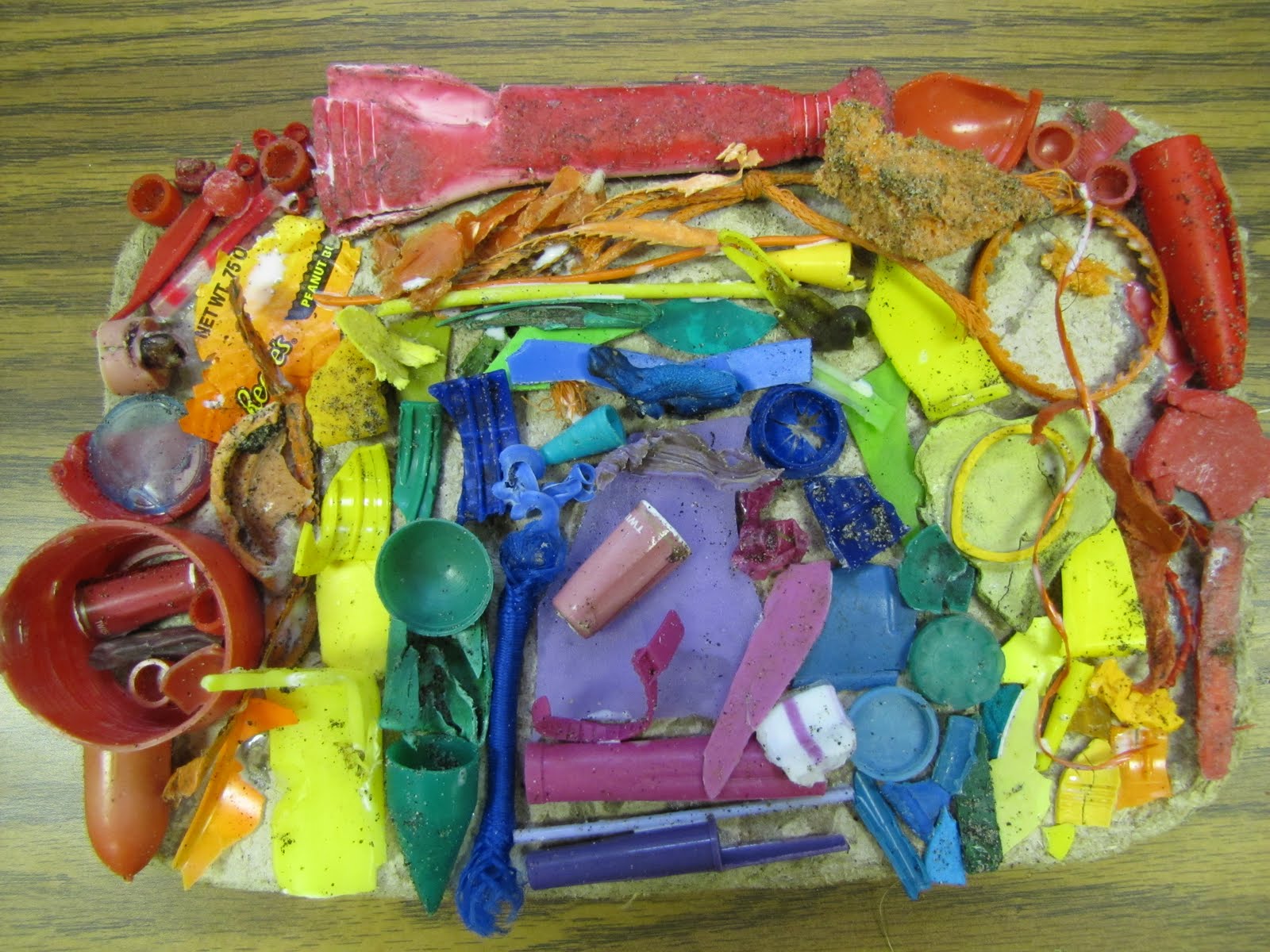
World Ocean's Day is now officially recognized on June 8th. This day gives us a chance to appreciate and reflect about the importance of our ocean waters and impact that we have on it. It's our chance to give back in any way that we can, through outreach, education, beach clean-ups, or songs. In celebration of World Ocean Day the folks at PTMSC organized a beach clean-up. With the help of sixteen fabulous volunteers we collected trash from over a mile of Fort Worden State Park!

 
                       Chrissy, Heather, Julia  and volunteers Luther and  Todd  find a plastics hotspot
 
Reasons why we love the oceans: 
  • It gives us oxygen to breathe
  • We find peace around it
  • Provides food for us
  • Holds unknown mysteries
  • Its beauty
  • Helps regulate our climate
  • Amazing sea life!
All of the trash found down a mile long stretch of beach
 
All of the plastic fragments
 
 
                     A cap o' caps                                                                                     Tons o' straws 
 
                Interesting finds                                                                                  Plastic rainbow of color
 

Do You Hear It?

The ocean is breathing, do you hear it?
Its soft breath rolls with every wave.
It crashes upon the sandy beach
Making its mark upon the shore.

The ocean is whispering, do you hear it?
It soft voice is a melody of the wind across the water.
It whistles silently through our minds
Making its mark upon our souls.

The ocean is calling, do you hear it?
The sweet sound of life beneath.
It calls to you, it calls to me
Making its mark upon our hearts.

The ocean is weeping, do you hear it?
The silent cries rise from the deep.
It pleads for us to save it
Making its mark upon our conscience.

Will you help it? Do you hear it?
The voice so sweet and gentle.
All it asks is that you help
And keep its breath safe from harm.

~Chicken Soup for the Ocean Lover's Soul

Ocean, we just wanted to say that we appreciate you. What do you appreciate about our oceans?

 
Valerie Lindborg
Lab Coordinator

 
References:
http://www.theoceanproject.org/

Chicken Soup for the Ocean Lover's Soul


Tuesday, June 1, 2010

The Orca Project meets The Blue Whale Project

In May, the Beaty Biodiversity Museum in Vancouver, B.C. unveiled their 85 ft blue whale skeleton to the public. Some of us here at PTMSC got a sneak peak!

Chrissy, Libby, Heather, and Julia with the Blue Whale skull!

At the crack of dawn we rubbed our eyes, rolled out of bed, stuffed our passports in our backpacks and headed for our neighbor to the north (also known as Canada). When we arrived, this project, which had been in the works for over 2 years, was coming to an end. Lee Post, our bone expert, accompanied us. It was fascinating to listen to him swap stories and information with Mike deRoos, the head articulator for The Blue Whale Project.

Bone Experts, Mike and Lee; examine the flipper bones of the blue whale.

The University of British Columbia's blue whale skeleton is full of interesting stories; some similar and others totally different from the tales of our own orca skeleton.  One of the more hilarious stories goes back to when the whale originally died on the East Coast in 1987. A local resident removed one of the blue whale's flippers (without permission!) with his personal chainsaw and stashed it in the woods behind his house for nearly 20 years. When UBC began excavating the skeleton, the man approached the crew and confessed the location of his blue whale souvenir. Grateful crew members then retrieved the bones, reuniting them with the rest of the body.

Here is a taste of what we saw:

Jess and the underside of the skull

Julia and the caudal (tail) vertebrae

Julia and Heather with a series of vertebrae

This experience left me feeling like a kid in a candy shop! Giddy, excited and fully stimulated! The finished skeleton is now on display at the Beaty Biodiversity Museum. I recommend heading up there and checking it out. I'm certainly planning to!

Learn more about The Blue Whale Project here: http://www.beatymuseum.ubc.ca/projblue01.html
Funding for PTMSC's Orca Project comes from the Institute for Museum and Library Services.

Looking forward to what's next,

Heather Jones, Orca Project Coordinator

Tuesday, May 25, 2010

Water World 2010

On May 2nd, Fort Worden experienced an influx of 56 fifth and sixth graders.  Accompanied by their parents and chaperones, most had traveled from Yakima, Puyallup or Spokane but a few hailed from Port Townsend. They were here to participate Water World; an annual camp that is a dynamic fusion of art and science.  As a collaboration between the Marine Science Center and Centrum, the staff included instructors from many artistic disciplines:  visual artist, Darwin Nordin, writer Nisi Shawl, and movement artist Christian Swenson. The marine biology contingent was comprised of Libby Palmer (co-founder of the Marine Science Center), Julia and Jess.
One of the quiet moments, drawing by the pond
Photo by: Al McCleese

Water World was an amazing, immersive experience for students and staff alike.  The days were jam-packed with classes on a wide spectrum of topics. The art classes included writing, drawing, painting, and movement. The science classes covered marine invertebrates, behavioral ecology of orcas, and the anatomy and life history of gray whales (students even put together an entire gray whale skeleton!). 
Vertebral Puzzlers
Photo by: Melinda Pongrey

Practicing scientific observation and drawing; Persephone put on quite the show! 
Photo by: Al McCleese

Time was also spent outdoors on an all-day beach walk that included a pond and the lagoon.  It was amazing to see how the science and art complemented each other throughout the week in every class.  The all-day walk had time for students to draw organisms they found, write about what they saw and create art installations on the beach out of shells, wood, sand and rocks.  Each student also got the opportunity to participate in a large beach seine. Evening activities included group games, crafts (creating their own sea creature), Native American storytelling, a campfire on the beach and a final student performance/presentation of their work.
Inspecting a pond sample.
Photo by: Darwin Nordin

 
Students created  large-scale, abstract beach drawings. 
Concept and photo by: Darwin Nordin

 
One of the main objectives of Water World is to enhance students’ understanding of the marine environment through the lenses of both science and art. Unfortunately, it seems that many people today believe a rigid dichotomy exists between these two fields, but this program exemplified how art and science can not only co-exist, but also can beautifully enrich each other. These 5th and 6th grade students were able to seamlessly integrate art and marine biology, creating awe-inspiring works of art that depicted new scientific information they had gleaned from their classes. As instructors it was a true pleasure to engage with students whose curiosity, creativity and enthusiasm were so evident.
Movement teacher, Christian Swenson exploring a tide pool with a student. 

Photo by: Darwin Nordin


An installation on the beach, inspired by the nature-art of Andy Goldsworthy.
Photo by: Darwin Nordin

Julia Ledbetter and Jess Swihart

For more information visit Centrum's website: