Friday, October 11, 2013

VIDEO: A Link To Action

Short video highlighting the work being done by the Marine Mammal Stranding Network and it's volunteers coordinated through the Port Townsend Marine Science Center. Video produced by Al Bergstein.

Port Townsend Marine Science Center - The Link to Action from Al Bergstein on Vimeo.


To learn more, check out PTMSC's Marine Mammal Stranding Network page.

Thursday, September 19, 2013

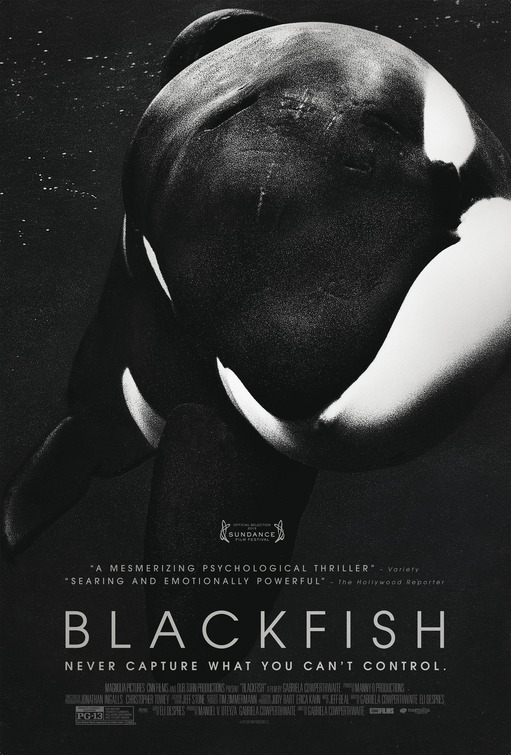
Special screening of Blackfish at the Rose Theatre


Blackfish Movie Poster


Saturday, September 28th
1 p.m.
Rose Theatre,
Port Townsend


Join the crews from Puget Sound Express and the PT Marine Science Center at the Rose Theatre for a special screening of Blackfish.

Ken Balcomb, who’s featured throughout the film and is the executive director of the Center for Whale Research in Friday Harbor, will do a Q&A following the screening. The event is co-sponsored by Puget Sound Express, the Rose Theatre and the Port Townsend Marine Science Center (PTSMC). Admission is $8 for adults, $7 for seniors and $6 for children.

Blackfish
is described as a mesmerizing psychological thriller with a killer whale (orca) at its center. The film features the story of Tilikum, who is an Icelandic transient. Unapologetically designed to both inform and affect, this delicately lacerating documentary uses the tragic tale of a single whale and his human victims as the backbone of a hypercritical investigation into the marine-park giant Sea World Entertainment.
“The documentary
Blackfish helps us understand the social structure of whales and provides a glimmer into their complex society,” said Janine Boire, executive director for the PTMSC. “The movie challenges our view of humans and whales and how we interact together.”


Pete Hanke, owner of Puget Sound Express, agreed saying, “The events portrayed in the film that took place 40 years ago still affect the orca population in our area today.  Blackfish certainly brings to our attention the impact of whale imprisonment for human amusement.”

Ken Balcomb is a pioneer in photo-identification of cetaceans and is the founder of Orca Survey (1976), a study of Pacific Northwest Southern Resident Killer Whales (Orcas). Not only has he participated in humpback studies across both oceans but also rare beaked whale identification throughout the world. One of his main interests is the effect of sonar on cetaceans and how that causes mass stranding. He founded the non-profit Center for Whale Research in 1985 and is its executive director.


Puget Sound Express has been in operation as a charter boat company for 27 years, offering whale watching tours. It’s a family-run business, with three generations of knowledge and caring at the ready. For more information, go to www.pugetsoundexpress.com or call 360.385.5288.

Tuesday, August 13, 2013

Oceanography On The Dock

Thursday, August 15
11am - Noon

Friday, August 16
2 - 4pm

Sunday, August 18
11am - Noon

FREE


Try your hand at being a scientist.
Use oceanography tools.
Learn why we measure things such as pH, salinity, dissolved oxygen and  nutrients in the water.
Drop in or stay as long as you like.
More sessions will be scheduled for July, August and into the fall.  Check back for dates!


For more information or to sign up, contact Jamie at 360-385-5582 x112 or email jlandry@ptmsc.org

Saturday, August 3, 2013

Marine Biology Camp 2013


            During opening circle last Monday for Marine Biology Camp, when prompted to state one interesting fact about yourself one young man set the tone for a wonderful week when he said, “my name is Cort and I like to stay positive,”. Again and again we counselors were impressed by the enthusiasm, intelligence, joy, and humor that the 32 nine to thirteen year olds demonstrated throughout the week.
            We started off learning about invertebrates, visiting the Marine Exhibit, and fish printing their camp shirts. Although they struggled to pronounce “Echinodermata” during invertebrate class, many of the campers were excited about exploring the touch tanks. Real fish were used to print colorful patterns on their shirts and many of the campers produced their own unique design.
            Tuesday the kids arrived energetic and ready for a day in the tide pools. We bundled up against the fog and explored the intertidal area near Point Wilson. The campers braved the slippery algae covered rocks to reach the lower intertidal, home to numerous invertebrates and fishes. Exciting discoveries included a hairy helmet crab, umbrella crabs, numerous sea cucumbers, big red rock crabs, brittle stars, gunnels, cling fish, and more. Although after lunch Plastics class was not a favorite, the lesson clearly hit home as the campers combed the beach to find trash. The most diligent embarked on a “nurdle hunt” in which they searched through the upper layer of sand and plants looking for tiny plastic beads that are melted down to make plastic.
            On Wednesday morning the signs of a busy tiring two days were beginning to show which meant we counselors were doing our job! This day was a favorite for many campers and staff alike. In the morning we split into two groups and half of the students returned to the marine exhibit to learn about, and sketch fish, while the other half peered into microscopes to study and learn about plankton. Afterwards the two groups switched. Amber’s fish talk had many of the kids in peals of laughter and numerous individuals cited the plankton class as their favorite learning activity of the week. In the afternoon we set out to build a whale to scale! After a vote the Orca won by a large margin over other local whales. Various teams such as artists, water collectors, and sand collectors began the task of constructing the 25 foot marine mammal. After a hectic start many of the workers formed a group which involved a dedicated team of diggers, an eight person line of bucket passers and bucket dumpers, and a small group of sand squishers, shapers, and smoothers. It was a truly exciting sight to watch the 32 kids work in an organized team. In the end they produced a marvelous sand whale with a surprising likeness to a real orca!
            Thursday involved a bit of travel on the public bus system with all of the campers. Although we filled every seat on the bus the transit went smoothly and we were delivered to the tide flats near the boat yard. The morning was foggy and the tide flats stretched out ahead of us at low tide full of promise. There we set up four stations: one for journaling, the next for checking out animals caught in a seine net, the third for digging up worms, and lastly a station for digging clams. Although all of the animal oriented stations were popular, the clam digging station stole the show. The record for clams unearthed in one 20 minute rotation was 36!
            We culminated Marine Biology camp on Friday with a Marine Birds class as well as a Fish Dissection class. Both classes were popular albeit the herring dissection was not popular with everyone. In the afternoon we unleashed the 150 foot long seine net and examined (in a large plastic pool!) the variety of fish and invertebrates we caught. Although small Dungeness crabs, surf perch, and soles dominated the sample, more unique finds included juvenile salmon, buffalo sculpin, various gunnels, and silver spotted sculpin.

            Overall Marine Biology camp was a phenomenal mix of learning and fun.  Many campers and parents expressed how much they loved the camp. First timers and repeat campers alike were already making plans to come back next year. Dates are currently being worked out for next year so keep an eye out on our Facebook page and website for more information!


Friday, August 2, 2013

Sail on the Schooner Adventuress

Saturday, August 31
10AM-4PM

The PTMSC offers a 6-hour sailing adventure to the Protection Island National Wildlife Refuge aboard the 101' historic schooner, Adventuress.

On this cruise you can help the crew sail this historic vessel while enjoying a leisurely tour of the wildlife sanctuary. As on all our cruises, a Marine Science Center naturalist who knows the island very well will help you see and appreciate its wildlife.


Tickets for Protection Island Sail are $80 per person
or $75 for members of PTMSC, Audubon, Burke Museum or Washington Ornithological Society.

Call 360-385-5582 to reserve. 
Email cruises@ptmsc.org for details.

Thursday, August 1, 2013

"Seal Pups Need Tough Love to Survive" by Gayleen Hays

Our Marine Mammal Stranding Network recently received a call on our message-line from a woman reporting that a seal pup was on a busy beach in front of her house. She was worried that the seal pup had been abandoned by its mother and wanted to know what she could do to help. I could tell by her voice that she was very distraught and fighting tears. Her story has a happy ending, but you'll have to read it for yourself! The short story that follows is one she wrote and kindly sent to us. I wanted to share it with you because I know there are others out there who can relate to Gayleen's experience.


When a stranded baby seal pup mysteriously appeared on our beach last Tuesday afternoon I called every emergency number on the planet until I was led to Danae at the Port Townsend Marine Science Center, in charge of monitoring baby seal pups. Danae explained how important it was that I follow the hardest advice imaginable: protect and guard the area with signs, watch the pup and... whether its mother returns from her feeding and carries it to safety or not and it dies, I could do nothing except hope, wait, and watch. It looked so vulnerable looking out at the water and crying for its mother, just lying there waiting for her to return. Only 50% survive. At sunset Wednesday night and still no signs of its mother as it waited facing the ocean and crying, I watched an eagle slowly circle the baby pup, and remembered her words, eagles depend on pups for nourishment. I could not intervene. Thursday morning when I forced myself the courage to check for his tiny body, he was gone! No signs of a struggle, he was gone as secretly as he'd appeared. Wherever you are, Mother Seal, thank you. And, a special thank you, Danae, for your guidance and compassion.


A word from the PTMSC Marine Mammal Stranding Network

Thank you Gayleen for sharing your story! Seal pup season brings a mixed bag of emotions. The babies are undeniably adorable with their big eyes and furry little bodies, making it impossible not to fall in love. Watching them wiggle around on the beach is both cute and hilarious. But there is a dark side to the seal pup season... as Gayleen mentioned in her story above, only 50% of harbor seal pups survive their fist year. Harbor seal populations have recovered to a healthy number, thanks to the Marine Mammal Protection Act, but that does not mean it is easy to handle the loss of a seal pup. 

So what should you do if you encounter a seal pup on the shore? The best thing you can do is give the animal space. Mothers often leave their pups on shore to rest. Adult seals are wary of people, so mom will wait until all disturbances are gone before reuniting with and nursing her pup (Gayleen waited two days!). Encourage people to "Share the Shore" by staying back 100 yards, if possible. Do not attempt to move, feed, pick up, or pour water on a seal pup. Please call the PTMSC Marine Mammal Stranding Network at 360-385-5582 x 103  for guidance or to report a dead, injured or stranded marine mammal. 


The National Oceanic and Atmospheric Administration (NOAA) recently released a short, two-page flyer with FAQs about harbor seal pups. It is loaded with great information (and is free of scientific jargon). To view the flyer please click HERE! You can put the flyer on your refrigerator, share it with your friends and relatives, enclose it with your holiday cards, or have it screen printed on your t-shirt or pillow case. Whatever method you choose, please spread the word about harbor seal pups. 

Enjoy those sandy beaches and rocky tide-pools this summer and remember to Share the Shore!  


View our new and improved webpage here
Also, check out our Marine Mammal Guide here 


Tuesday, July 30, 2013

Citizen Science in Pictures

How well do you know our Citizen Science projects? Here’ s a test! Below are short descriptions of the various projects volunteers carry out here at PTMSC and groups of photos. Can you match project descriptions with the pictures? Let’s see!


Sound Toxins: Volunteers sample for plankton at various sites, looking specifically for species that cause harmful algal blooms.  These organisms are harmful to human health and/or the economic health of Puget Sound, and we serve as an early warning system!

BEACH: Our volunteers brave the cold water (wading in a few feet) to monitor bacteria levels at local beaches and educate the public about the risks of polluted water.  We work with the government to close beaches when levels are dangerously high.

Mussels/PSP: We collect samples of blue mussels which are sent to a lab (via UPS! What an adventure!) and tested for the toxins responsible for paralytic shellfish poisoning.

Puget Sound Seabird Survey (PSSS): We identify local seabirds to develop a baseline of their populations and learn about how to target response efforts in the case of oil spills.

Ocean Genome Legacy Project: We take tissue samples of dead marine animals (that die in our exhibit or that wash up on shore nearby).  Their genome is sequenced to further scientific understanding of the marine environment in light of biodiversity loss in our world’s oceans.

Purple Martin: We’re keeping track of Purple Martins that land and nest in the houses built on our pier. Purple Martin’s experienced a dramatic population decrease in the last century so we’d like to know how our own local birds are faring.

Abalone Halfway House (brand new!): Due to the staggering population decline in Pinto Abalone caused by recreational overfishing, we partnered up with the Puget Sound Restoration Fund to raise 200 juvenile Abalone. We are housing one group in the lab and another on the pier and gathering data on their growth rates.

Oceanography on the Dock (brand new!): A free program intended to get the public involved in testing some physical oceanography parameters. Guided by a staff or volunteer, O-dock participants measure salinity, pH, temperature, turbidity, dissolved oxygen, and more while learning about their connection to conservation. 

Now…here’s your test! Match the project descriptions with their photos. Answers at the bottom.


Project 1
Project 2
Project 3
Project 4

Project 5
Project 6
Project 7
Project 8

Answers:

Project 1 - Abalone Halfway House
Project 2 - Purple Martin
Project 3 - BEACH
Project 4 - Ocean Genome Legacy
Project 5 - Oceanography on the Docks
Project 6 - Puget Sound Seabird Survey
Project 7 - Mussels/PSP
Project 8 - Sound Toxins

Did you pass the test?  I hope this gallery of our fabulous work inspires you to keep working hard as a volunteer or to get involved if you aren't already.  Keep in mind there are always ways that you can be a citizen scientist!

Coming Soon:
Roof Runoff: We’ll be sampling roof runoff from houses both in Port Townsend and Seattle to test for toxic chemicals.  If you are available to be trained for sampling in the fall and want to participate, we’d love for you to get involved!  Please contact Jamie Landry at jlandry@ptmsc.org or 385 5582 x112.